'Superman' Reinvigorates the Man of Steel with Heart and Humor
- Jonathan Parsons

- Jul 14, 2025
- 6 min read
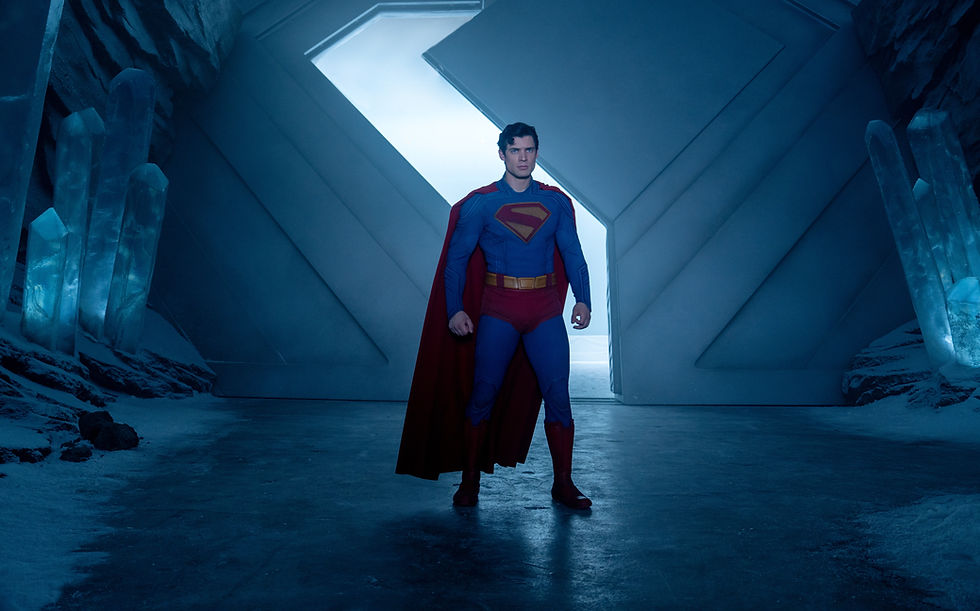
As the new co-chair of DC Studios, alongside producer Peter Safran, James Gunn makes his directorial debut for the studio with Superman, a film that carries his signature mission: to inject irreverent humor and unabashed, exhilarating genre geekdom into the often-oppressive darkness of contemporary superhero cinema. The result is a comic-book action-adventure grounded by a genuinely warm human heart. The movie clearly stems from a deep affection for Richard Donner’s 1978 event movie and the arguably superior Superman II, managing to pay tribute without succumbing to the reverential self-seriousness that marred Bryan Singer’s joyless 2006 effort, Superman Returns, or the deliberate distancing from the Donner model that proved fatal to Zack Snyder’s turgid 2013 Man of Steel. Following a series of cluttered superhero smackdowns in the new millennium, this new vision arrives as a much-needed revitalization for Kal-El, the refugee alien from Krypton created by Jerry Siegel and Joel Shuster in 1938.
Gunn's screenplay could be criticized for its tendency to pile on too many elements, leaving the film feeling somewhat lumpy and overstuffed at times. However, the production succeeds where it matters most: it is fun, pacy, and relentlessly enjoyable, offering a breath of fresh air boosted by a profound affection for the source material and driven by a winning trio of leads.
David Corenswet is an outstanding Superman/Clark Kent, loading his performance with self-irony, charm, and poignant vulnerability as he grapples with existential doubts about whether his mission to protect humankind was founded on a lie. Corenswet’s funny and scrappy rapport with Rachel Brosnahan’s Lois Lane is a highlight, offering perhaps the sharpest and most captivating interpretation of the Daily Planet ace reporter since Margot Kidder.
Nicholas Hoult wisely dials down the cartoonish villainy often associated with Lex Luthor, leaning instead into the character’s evil genius aspect to significantly heighten the stakes. While Hoult’s Lex is often the smartest person in the room, he is also petulant and insecure, driven as much by jealousy over the world’s adoration for Superman as by his desire to eliminate anything that stands in the way of his nefarious schemes.
The film opens with a quick primer on the centuries-old history of metahumans on Earth, immediately plunging the audience into action with Superman's first defeat at the hands of one of them. We find him collapsed and bleeding in the snow, summoning strength only to whistle for his trusty dog, Krypto. The Superdog, who also sports a red cape but acts like an undisciplined puppy-school reject, borders on cutesy. However, given that Gunn successfully made a genetically engineered talking raccoon and a sentient humanoid tree into beloved figures in Guardians of the Galaxy, the Superdog is well within his reach, mercifully featuring a lighter touch on the "bro-ish" humor of that franchise.
After Krypto drags the wounded Superman back to his crystalline refuge, the Fortress of Solitude, a team of robot helpers gets to work. The custodial droids, identified only by numbers, are a nice touch, with the chattiest of them, No. 4 (Alan Tudyk), providing laughs by continually speculating on the human emotions they would feel if they could. They heal him physically with a blast of sunlight and soothe him emotionally by replaying a partially lost farewell hologram message from his parents, his last remaining link to his destroyed home planet.
Back in Metropolis, Superman is attacked again, this time by the Hammer of Boravia, a heavily armored mystery figure with powers similar to, or exceeding, Superman’s own. The Hammer causes massive downtown destruction but shifts the blame, claiming the chaos was a response to Superman’s attack on his country’s armed forces. Superman argues his actions were taken to prevent a war following Boravia’s attempt to invade the poor neighboring country of Jarhanpur, a claim that the shady Boravian president (Zlatko Burić) denies, insisting the Hammer is merely a vigilante.
Unsurprisingly, this escalating chaos is being orchestrated by Lex, high up in his glass tower at LuthorCorp. Operating as a tech billionaire in the Musk/Zuckerberg mold, Lex directs a team of black-uniformed techies via a Bluetooth headset, calling out numbers like a football coach to execute preprogrammed fight moves for the Hammer. Hoult grants Lex sufficient ambiguity to blur the lines of his villainy, making him simultaneously seem concerned about humankind being enthralled to an alien and obsessed with acquiring absolute power.
Gunn treats the vast canon of Superman lore—from comics and TV shows like Smallville to the Donner films—like a grab bag, skillfully plucking elements from many sources. This includes Lex’s most valued ally, Angela Spica (María Gabriela de Faría), known as The Engineer, a dark-eyed beauty whose nanite-enriched blood allows her to morph body parts with inky black fluidity. This skill proves crucial when she hacks the Fortress of Solitude’s digital hub, enabling Lex to release an unscrambled copy of the message from Superman’s parents, thereby seeding doubts about his intended mission on Earth.
This plot point illustrates how superhero sci-fi can intersect with real-world AI concerns, showcasing how manipulated information can be circulated to turn a revered public figure into a pariah. Only slightly less relatable is Lex’s fleet of trained monkeys at computer monitors, whose job is to flood social media with falsehoods and conspiracy theories, creating damning anti-Superman hashtags that stick.
Gunn’s script is undeniably dense, featuring:
A Luthor-constructed “pocket-verse” hi-tech prison.
Rex Mason/Metamorpho (Anthony Carrigan of Barry), a humanoid exploited by Lex for his ability to transform body parts into chemical elements, including Kryptonite.
The metahuman Justice League, a trio of corporate-backed law enforcers consisting of the tech wizard Mister Terrific (Edi Gathegi); airborne warrior Hawkgirl (Isabel Merced); and their self-appointed, self-inflated captain, Guy Gardner/Green Lantern (Nathan Fillion), who sports the worst bowl cut and dye job in Metropolis.
Paradoxically, the human heart that grounds this busy fantasy is the alien from Krypton. Corenswet’s warmth successfully anchors the film whenever it threatens to veer into overly busy territory. Lex’s sabotage sparks an existential crisis in Superman, who, at his lowest point, retreats to the farm of his adoptive parents (Neva Howell and Pruitt Taylor Vince) in one of the movie’s loveliest and most affecting interludes.
Corenswet is equally strong as Clark, tempering the character’s usual nerdy awkwardness with greater confidence in his role at the Daily Planet without making him too slick. A major factor in this more self-possessed Clark is Gunn’s choice to remove the mystery of his dual identity for Lois, dropping the audience three months into their relationship. While his secret identity remains safe from cigar-chomping editor Perry White (Wendell Pierce), Steve Lombard (Beck Bennett), and Jimmy Olsen (Skyler Gisondo), Lois plays along at work, increasing the undercurrent of romantic frisson in her flirtatious banter with Clark. Their one-on-one time in Lois’ apartment becomes the film’s stealth weapon. In an amusing moment, Lois shrugs off his concerns about exposure, suggesting that people are bound to figure it out, prompting Clark to respond, “But the glasses?” Brosnahan and Corenswet are especially disarming in a scene where Clark agrees to be interviewed by Lois after she complains he always gets the "Superman exclusives"—a subtle suggestion that the Man of Steel is somewhat controlling about his media profile.
Gunn also makes an appealing choice by having the Daily Planet team pile into Mister Terrific’s T-craft flight vessel to help rescue Superman and avert an impending disaster. Boyish and cocky Jimmy Olsen proves a real asset thanks to his clandestine connection with Lex’s fashionista, selfie-snapping girlfriend, Eve (Sara Sampaio). Though never explicitly named Miss Teschmacher (played divinely by Valerie Perrine in the Donner films), she is the same character, and perhaps not as shallow as she first appears. The tantalizing, brief appearance of another canonical Superman universe character near the end successfully whets the appetite for a sequel due next year.
Pumped up by Henry Braham’s dynamic camerawork, Beth Mickle’s imaginative production design, top-notch CG work from the effects team, and a galvanizing orchestral and synth score by John Murphy and David Fleming that weaves in the immortal John Williams theme, Gunn’s Superman is sometimes overloaded and muddled, but it is relentlessly entertaining. Perhaps its biggest strength is its deliberate avoidance of the revisionist murk that has defined superheroes on screen in the last decade, choosing instead to revert almost to an enchanting state of child-like wonder.