ANEMONE: The Agony of the Absent Father
- Brad Willows

- Oct 13, 2025
- 3 min read

ANEMONE is a relentlessly dark and weighty psychological drama centered on the Stoker family, a lineage fractured by violence, faith, and the long shadow of the past. The film follows Ray Stoker (Daniel Day-Lewis), an embittered, abrasive man who has lived as a hermit for two decades in the remote, mossy wilderness of northeastern England. Ray's self-imposed exile stems from deeply buried trauma related to his service in the British Army during the Northern Irish "Troubles," combined with the wreckage of his childhood.
Ray’s solitude is violently interrupted by the arrival of his estranged, devout brother, Jem (Sean Bean). Jem has ventured into the wilderness—both literally and figuratively—on an urgent mission: to convince Ray to return home and confront the consequences of his absence. Back in the city, Jem's wife, Nessa (Samantha Morton), and her son, Brian (Samuel Bottomley)—Ray's biological child—are struggling under the weight of Ray’s left-behind legacy, as Brian faces trouble with the military and harbors a consuming anger.
The film then becomes a tense, claustrophobic chamber piece, focused on the agonizing process of two broken brothers attempting to peel back the layers of trauma, unspoken resentments, and a terrifying family history, leading to explosive confessions and a reckoning that has been 20 years in the making.
ANEMONE arrives draped in immense expectation, primarily because it marks the cinematic return of Daniel Day-Lewis. The film is, in many ways, an extension of his mystique—a story about a legendary, formidable man driven into self-imposed isolation. What the film delivers is a gorgeous, frequently inert, and ultimately frustrating meditation on generational guilt.
Ronan Day-Lewis, making his feature directorial debut, is an assured visual stylist. Working with Cinematographer Ben Fordesman, the film is a technical triumph of atmosphere, utilizing the stark beauty of the British countryside to create a genuine sense of foreboding. We are treated to stunning, painterly shots of golden wheat fields, ominous skies, and verdant green forests. The camera lingers on these visuals, treating every close-up of Daniel Day-Lewis's face as a meticulously carved portrait, capturing his character’s sorrow, resentment, and hardened indifference in exquisite detail.
The younger Day-Lewis uses every stylistic flourish available—slow motion, sweeping aerial shots, and a deafening soundscape—to hammer home the seriousness of the emotional turmoil. The film certainly looks important, with its palpable atmosphere of Gothic dread, but these deliberate techniques frequently draw attention away from the core narrative rather than enriching it, resulting in a sense of over-elaborate self-import.
Unsurprisingly, the film’s emotional anchor and reason for viewing is Daniel Day-Lewis. He is a magnetic force, delivering a ferocious and masterful performance as Ray Stoker. He plays the hermit not merely as a recluse but as a volcano of rage and guilt, constantly needling his brother with sardonic wit and foul-tempered energy. Ray's monologues—particularly the two central confessions that finally break the dam of silence—are mesmerizing and feel hard-earned, injecting the two-hour narrative with brief moments of raw, explosive cinematic life. Ray is a captivating, if monstrous, creation, and his portrayal is a masterclass in physical and emotional precision.
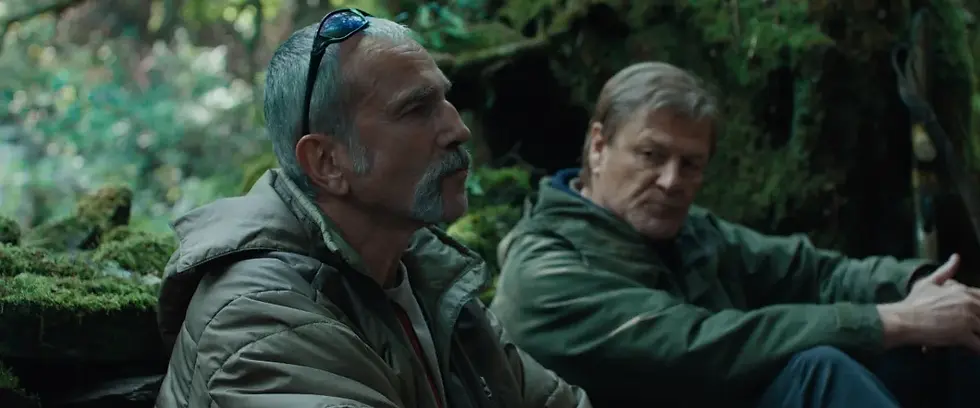
The supporting cast, while strong, often struggles for breathing room in Ray’s immense shadow. Sean Bean grounds the film with his empathetic performance as Jem, the spiritual brother trying to broker peace, but his role is often relegated to sitting and silently absorbing Ray's fury.
For all its aesthetic splendor and acting prowess, the film is fundamentally hampered by an obtuse, withholding script and an inconsistent tone. The dialogue is minimal for long stretches, equating silence with depth, yet the film often feels empty and tiresomely slow. It is a chamber drama that resists narrative thrust, spending too much time in pensive contemplation and not enough in character development.
Furthermore, the director’s ambition to transcend the simple family drama occasionally causes the film to veer wildly off course. The introduction of symbolic, quasi-religious imagery—specifically involving water—feels heavy-handed and excessive. Even more jarring is the occasional shift into elements of magical realism and surrealism. These flourishes, meant to represent Ray’s war-torn psychological state and PTSD, feel unearned and disrupt the dark, pastoral realism established in the first act. The final move toward a sense of reconciliation feels baffling and unsatisfying, having spent the preceding two hours deliberately prolonging every moment of truth.
In the end, ANEMONE is a deeply felt and undeniably gorgeous drama that serves as a powerful showcase for its returning star. However, its relentless gloom, self-consciously slow pace, and stylistic excesses ultimately make it a frustrating, if fascinating, experience. It is a film that demands immense patience, yet struggles to offer the necessary emotional rewards to justify the arduous journey.